Story and photos by Roberto Motta
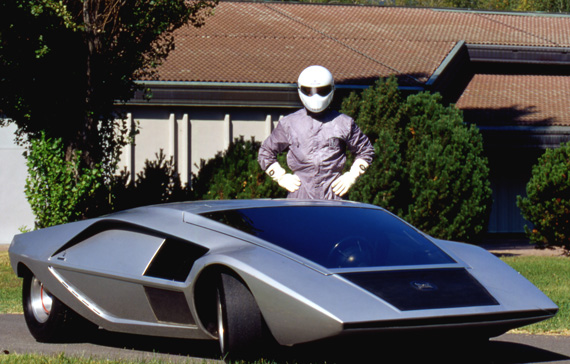
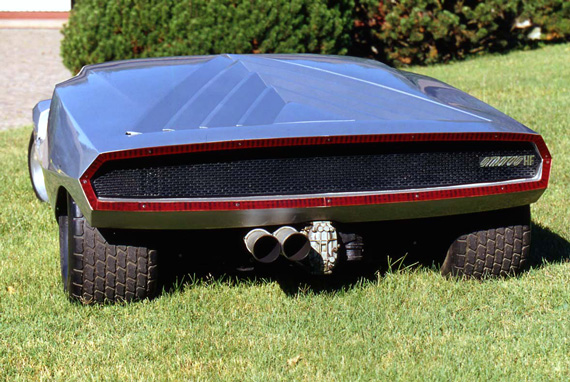
The Bertone Stratos Zero, introduced at Turin in 1970, is very different from the car that won three World Rally championships, and is totally different in respect to all its mechanics parts. However, this car provided the inspiration for the later Lancia Stratos Rally.
In the report below, VeloceToday Correspondent Roberto Motta describes the car in detail.
“Stratos”, from “stratosphere” is a name normally associated with an object alien to our environment, with strange links to time and space which surpass the confines and realities of daily life. In other words, something so fantastic it probably could not be real.
In reality, the new Stratos Zero prototype was a high performance car characterized by extreme lines but, as a project of Nuccio Bertone, was a fully functional, driveable car, unlike most of the extreme “concept” cars built for car shows.
The story begins in the 1960s, when the rear engine Alpine Renault A110 won the Czech Rally and the Coupe des Alpes with a small capacity engine. The Alpines did not go unnoticed by Nuccio Bertone, who understood their potential. He decided to create a new model and suggest it to the “Squadra Corse Lancia” to replace the older and glorious front wheel drive Fulvia.
Bertone and Marcello Gandini were also involved with the creation of the unforgettable Lamborghini Miura in 1966 and had a chance to evaluate the possibilities of mounting the engine in the middle of the car with the aim to optimize the weight distribution, and reduce clutter. This would also serve to allow a very low front profile.
Rather than start with a drawing of the occupants, Gandini sketched a car that was a wedge-shaped section, much like the wing of a glider. The structural dimensions and shape meant that the ergonomics would have to be figured out in order to have two people sit in the car. It was a purposeful afterthought.

As the twenty seven-year-old Gandini imagined it, the car would measure only 840 mm (34 inches) in height and 1870 mm (73.6 inches) in width, necessary to accommodate the suspension and to house a V4 Lancia 1.6 HF engine and drive train longitudinally at the rear. Bertone chose to employ this type of propulsion unit since after watching the Alpines, he was convinced that a car thusly equipped would have the potential for winning and would revive Lancia’s diminishing interest in rallying. The PR potential was also a prime factor.
There are a few variations on how the name Stratos was chosen for the project. Reportedly when the workers at Bertone saw the plans for the car they dubbed it Stratos. Gandini himself said the name came from a glider, as the car resembled the wing section of the aircraft. Whatever, it was apropos.

sadfsf
Because of Lancia’s recent takeover by Fiat and a new line of cars (the Beta) were all front wheel drive, Bertone was convinced that if he asked Lancia for a new engine to use in his project, there may be a delay in the development of the Stratos, or even a request to stop the project, so he kept it secret and personally purchased a used Fulvia 1.6 HF as a donor car. It required a great deal of work to fit and adapt the engine/transmission unit from the front engined, front wheel drive to rear engine, rear wheel drive of the new Stratos.
The ultimate in styling exercises, the Stratos Zero would be functional, if not ergonomically suitable.
When the Stratos Zero was brought to the hall of the Turin Motor Show, in October 1970, the car was not finished, and it was hand pushed to the stand. But two weeks after the event, the Stratos was completed and driveable.
The show also featured the new Fiat 124 and 125, the Alfa Montreal, the new series Lancia Fulvia, along with the Aston Martin DBS and Opel Ascona. The unusual and provocative shape of the Stratos brought immediate attention from the public, but not the managers at Lancia, the ones eagerly Bertone sought to impress!
Only Cesare Fiorio, head of the Lancia Corse, seemed to be observing with interest, but only after he had been informed that the car was powered by a HF 1600 Lancia engine. And of course Fiorio had his own ideas about a future rally car, which just happened to be along the same lines as Bertone.

In November 1970, Bertone had invited some journalists to drive the car in order to carry out a test on the Stratos, but it was suspended because there was very bad weather. A month later the car was taken to Brussels for an actual test drive. Months later, several Lancia managers read about the Stratos test at Brussels in an Italian magazine. Ing. Pierugo Gobbato, Lancia’s general manager, phoned Bertone and told him that he had not noticed the Stratos until the road test in the magazine!
The next day, in the afternoon, Bertone and Bertone PR chief Beppe Panicco drove the noisy Zero through the streets of Turin to via Monginevro-Borgo San Paolo to arrive at the Squadra Corse Lancia HF (Squadra Corse was founded by Cesare Fiorio in 1963 and Fiorio remained until 1984.) So loud was the car that everyone in the shop, including Fiorio, ran out to see what the commotion was about. But it wasn’t the noise that made an impression, it was the concept.
A few days later, Gobbato had a meeting with Bertone and started the development of the new Stratos project that permitted Lancia to win three world rally championships. The project would eventually result in the Ferrari V6 engined Lancia Stratos Rally car.
The Stratos Zero went around the world, appearing in all the major Motor Shows, in many films and ads. Its appearance was always startling and the car proved to be extremely photogenic.
This story originally appeared in VeloceToday in October, 2008