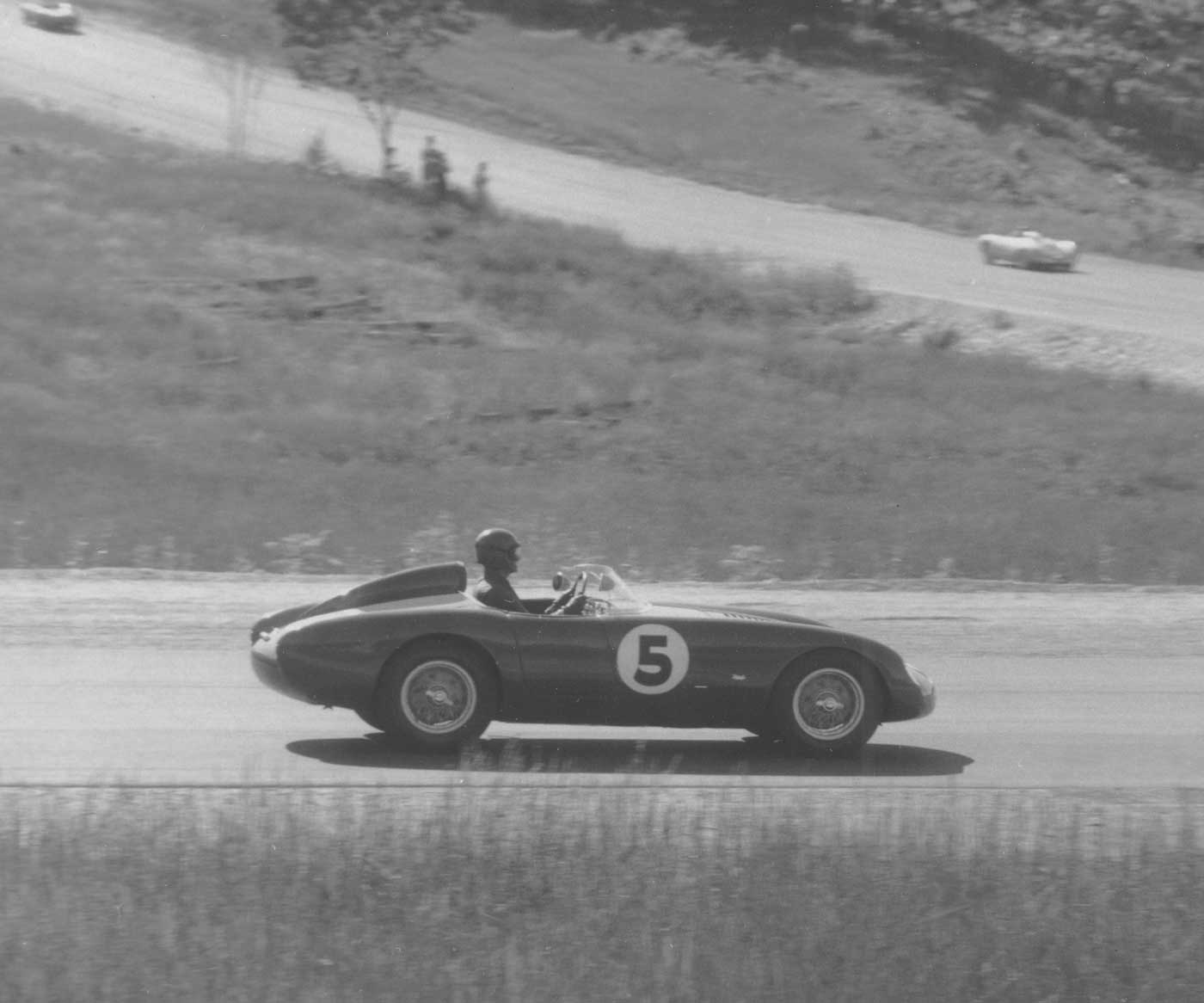
Jim Kimberly in the OSCA coming down the hill into turn five.
Text by Robert Birmingham
Photos by Glen Glendenning
Road America June Sprints, 23-24, 1956
After an exuberant late 1955, an abbreviated time to sit back and smell the roses was shortened even more when the Chicago Region SCCA received approval to hold two race weekends at Road America, the first on June 23 – 24, 1956 and another on September 8 – 9. If that wasn’t ambitious enough, the National Association for Stock Car Racing’s (NASCAR) Grand National Series secured a race date in August. Clearly all involved, Clif Tufte and his extended team, local merchants and SCCA officials, had their winter hours spoken for to assure competing drivers and their respective teams, area merchants and attending fans from across the Midwest and beyond had safe, enjoyable and profitable summer.
Chicago Region officials were quick to review and address the previous year’s inaugural event as it pertained to driver and fan safety and the important role needed to be played by volunteers, mostly inexperienced corner workers. SCCA had yet to have a corner worker’s manual and therefore workers and marshals performed at risk to themselves and to hard charging racers.
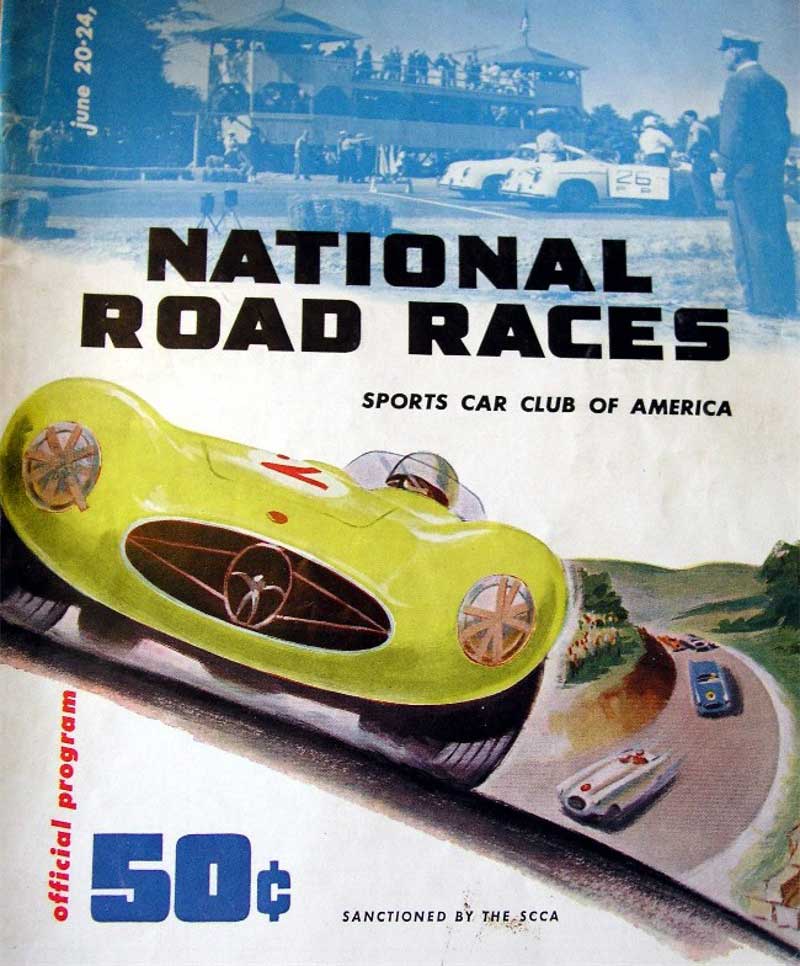
In this article we will only cover the 1956 June Sprints.
Upon presentation to Clif Tufte and his lead staff, it was clear both organizations were on the same page. Tufte and crew addressed the need to make improvements to the overall physical plant – muddy paddock and other grassy areas needed to be seeded, haybale and snow fence placement moved, clearly crowd control and spectator comfort were paramount. Based on 1956 concession sales, coupled with an expected increase, a need to review and plan was imminent. There was a lot to do.
The June weekend program consisted of six races, three on Saturday June 23 and three on Sunday. Friday’s practice was not without perilous moments. Walt Hansgen had an off-road, twice roll-over excursion after Corner 6 in the Cunningham entered D Jag that ended with little more than aches, pains and paint scrapes on his helmet. Sunday’s 150-mile feature race was very competitive but in the end it was Carroll Shelby’s Ferrari 121LM taking checkered flag.
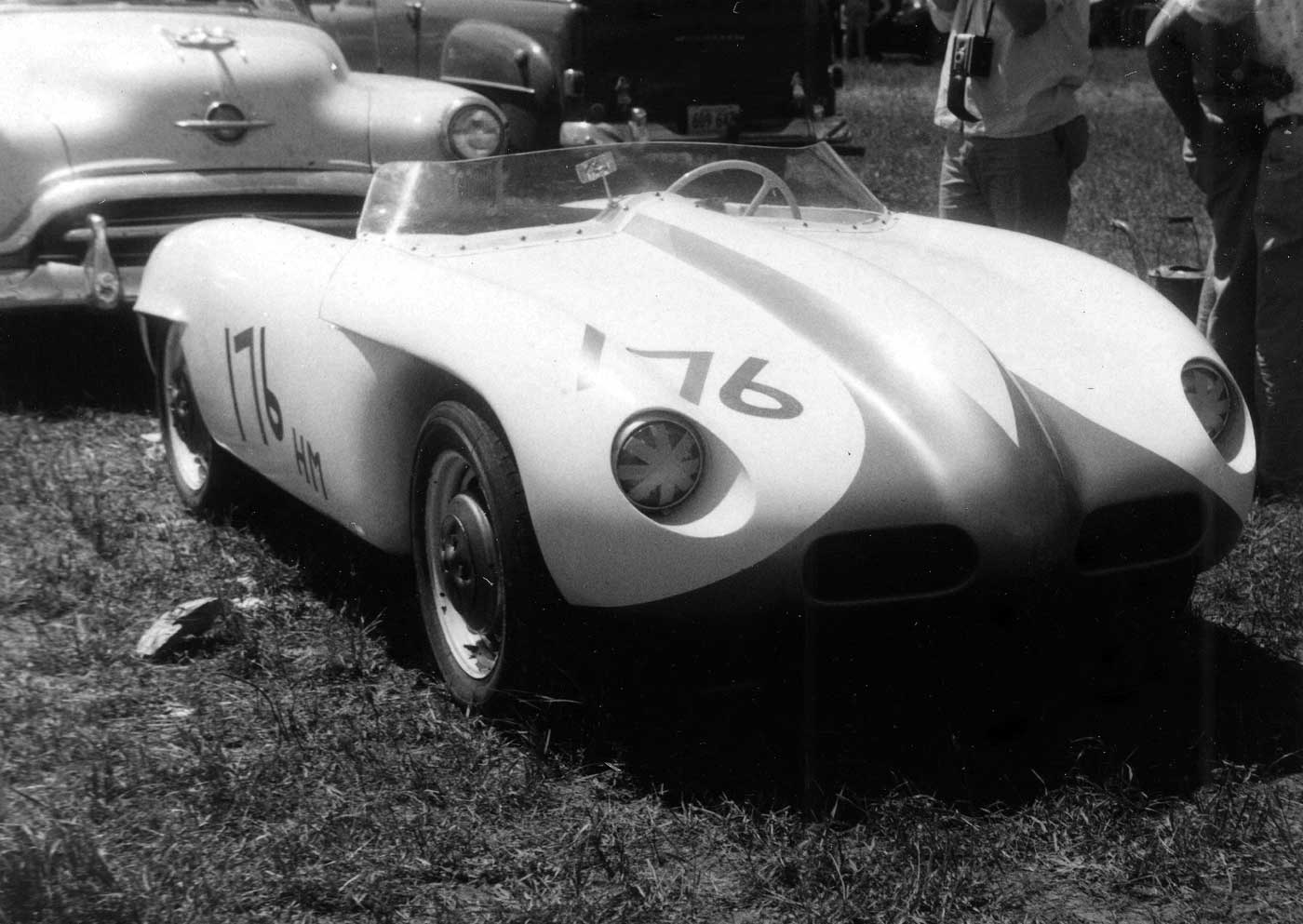
James Orr, Devin Panhard, placed 10th in race 6.
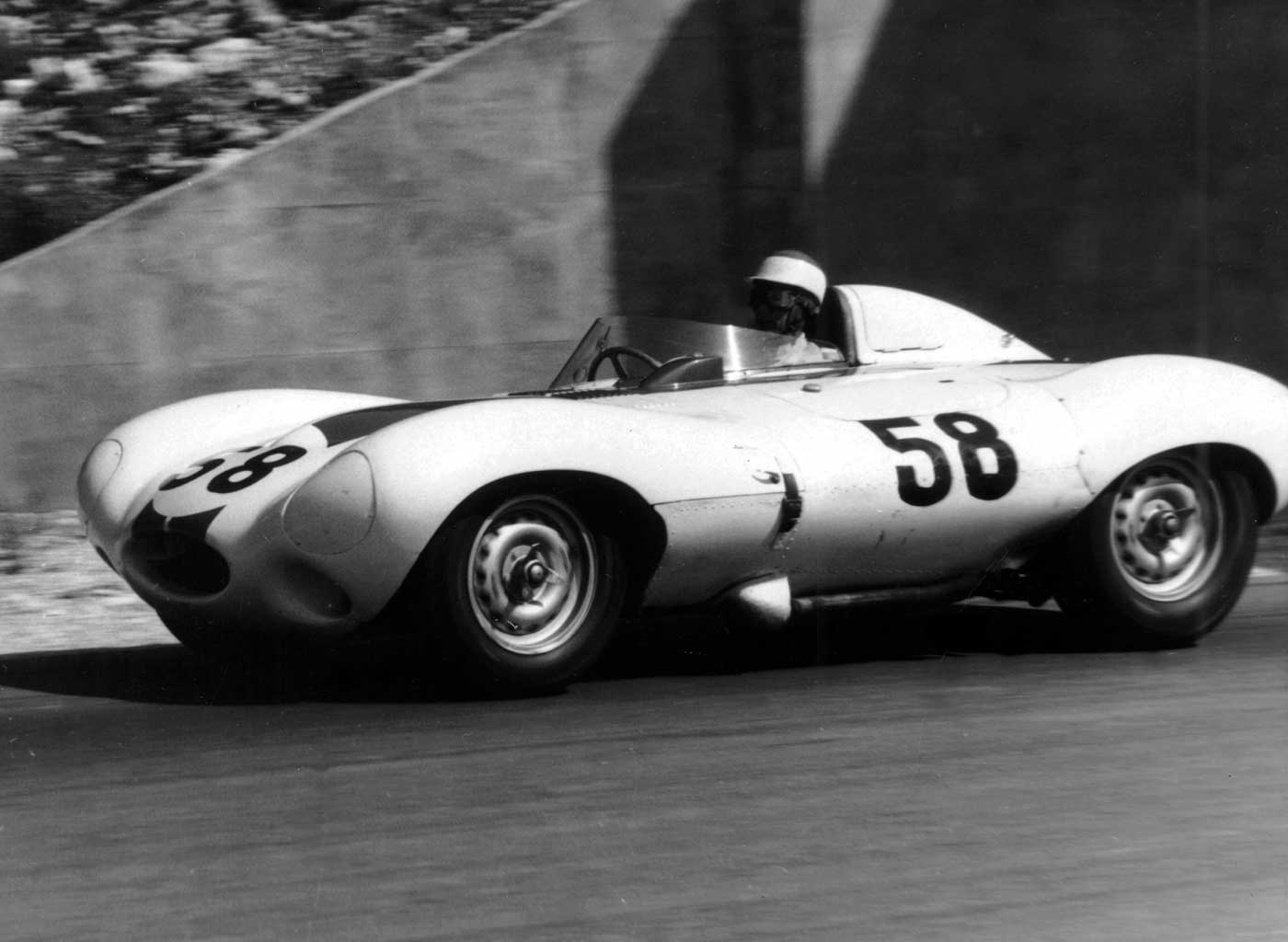
D Jag, Sherwood Johnston, DNF in Race 7.
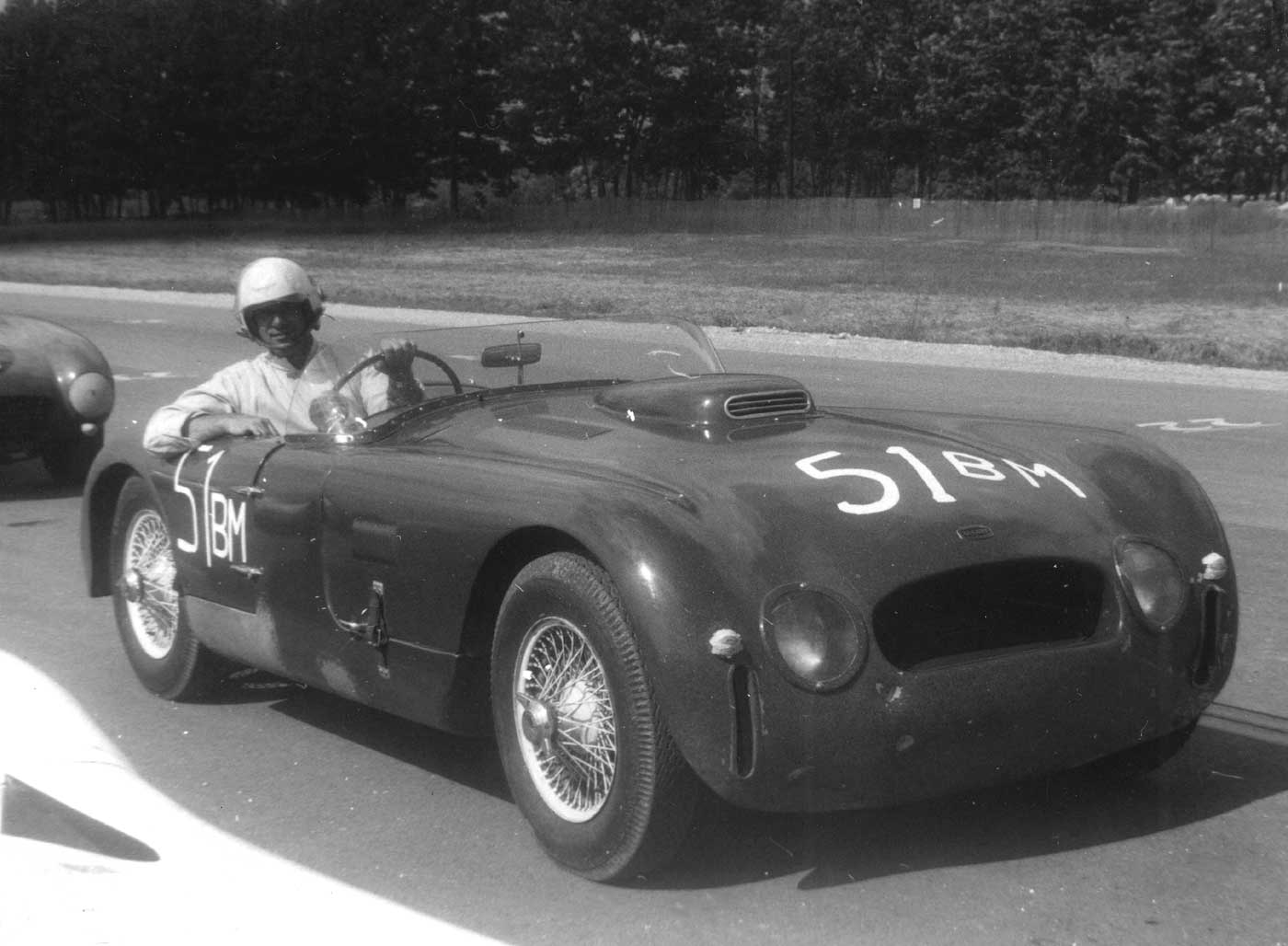
Allard, Walt Grey, finished 14th, race 7.
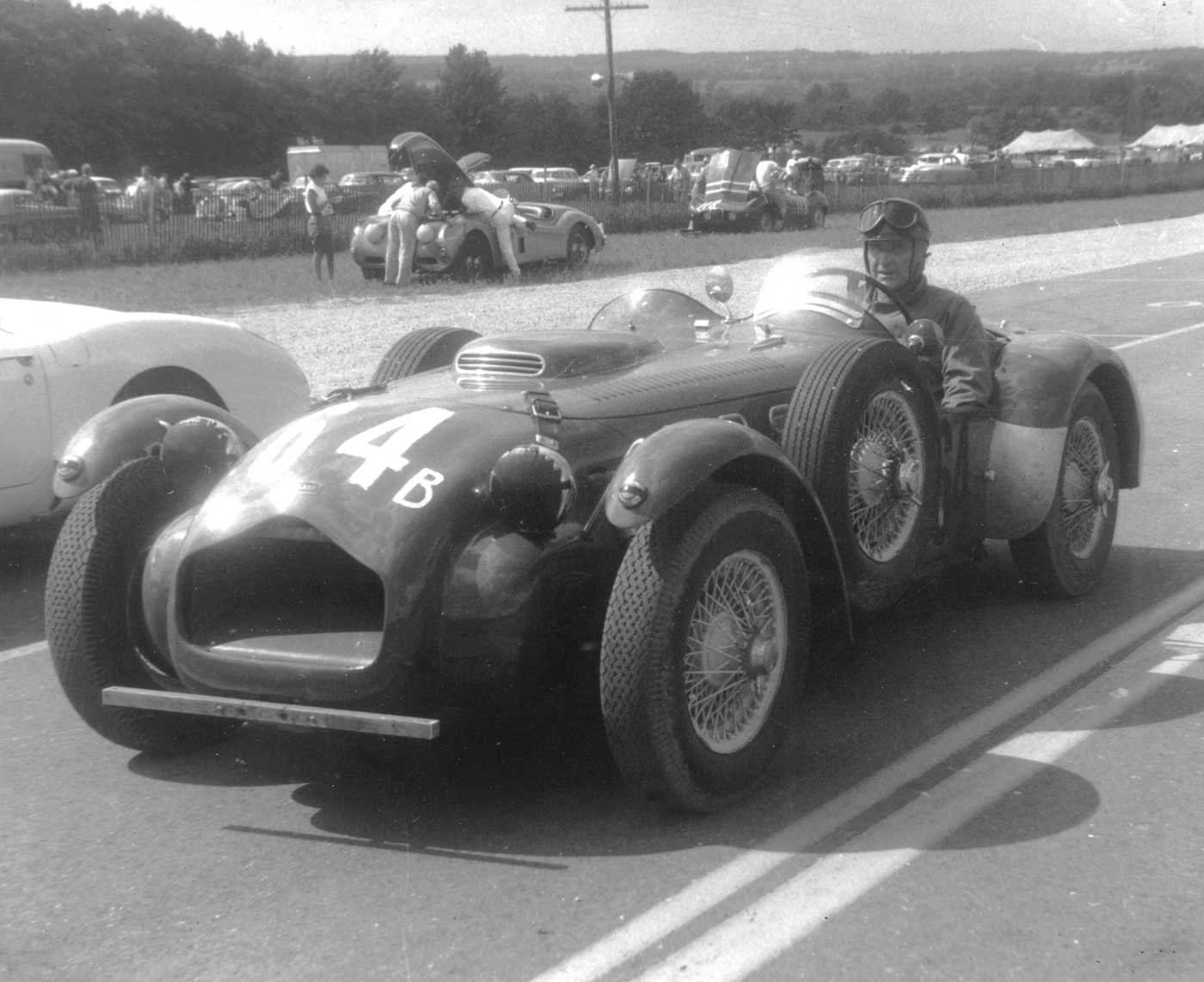
Allard of Tim McGrade would finish 17th in race 7.
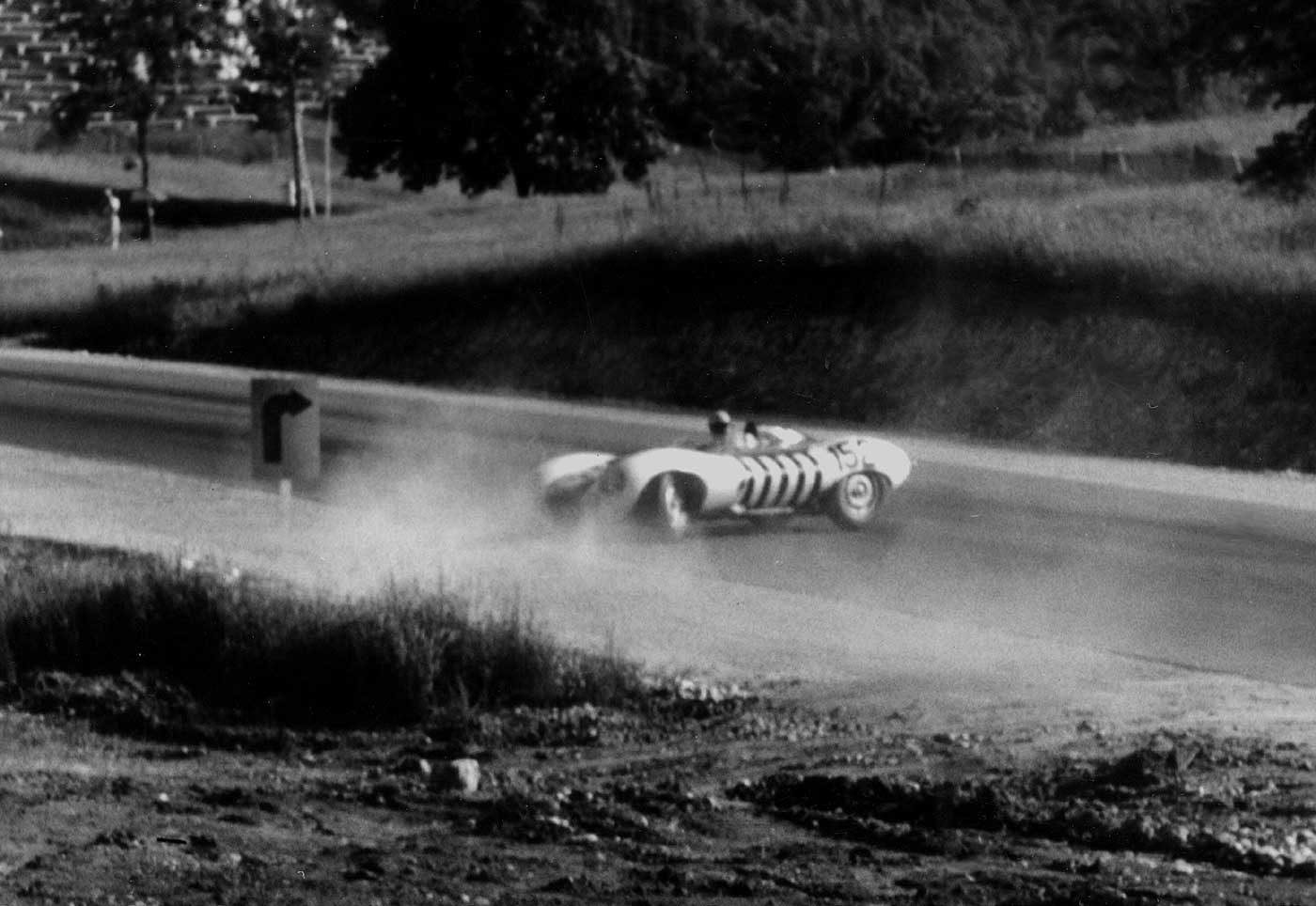
D Jag, Lou Brero, placed second to Shelby in race 7.
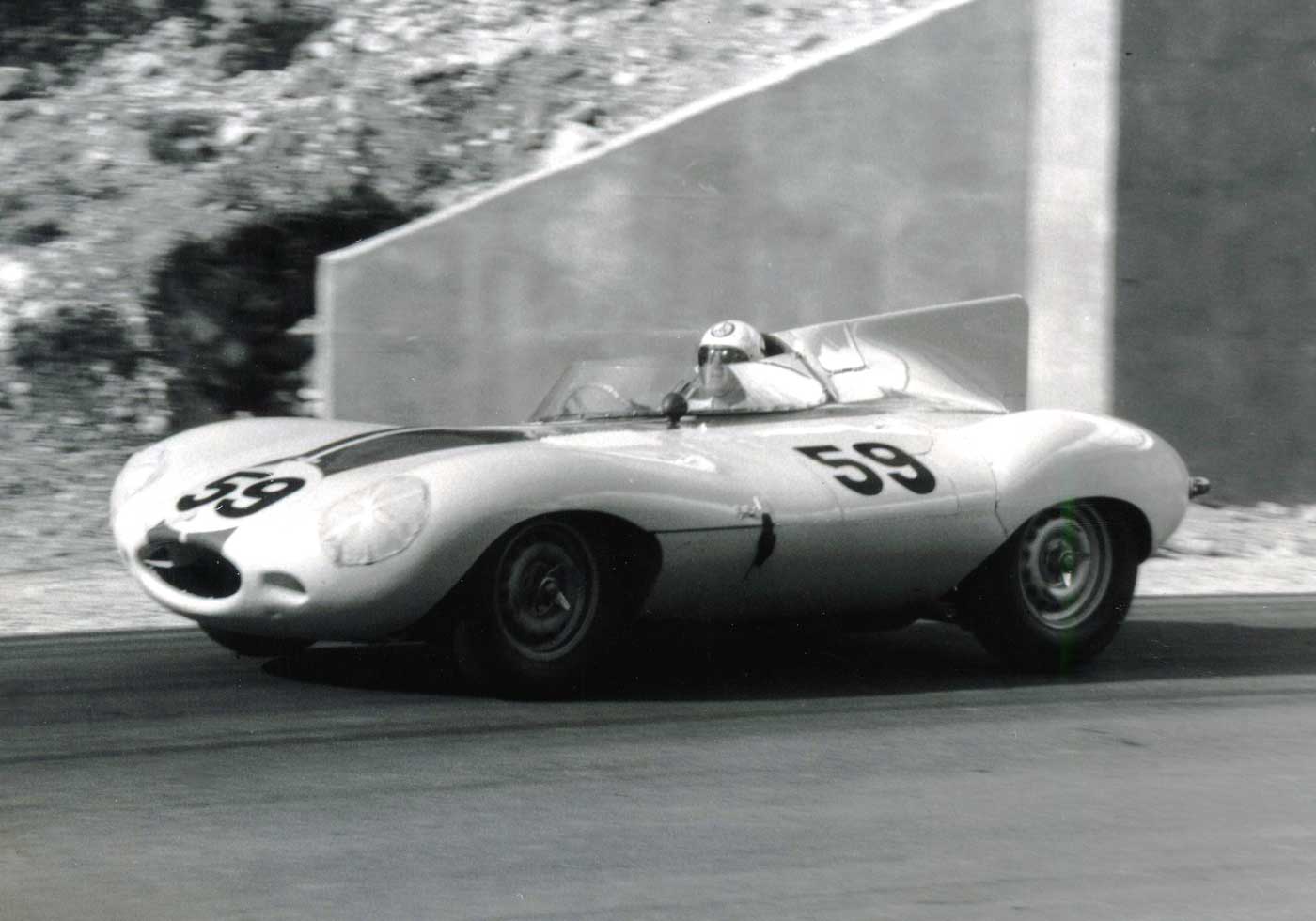
Walt Hansgen in the Cunningham D Jag DNF’d in race 7.
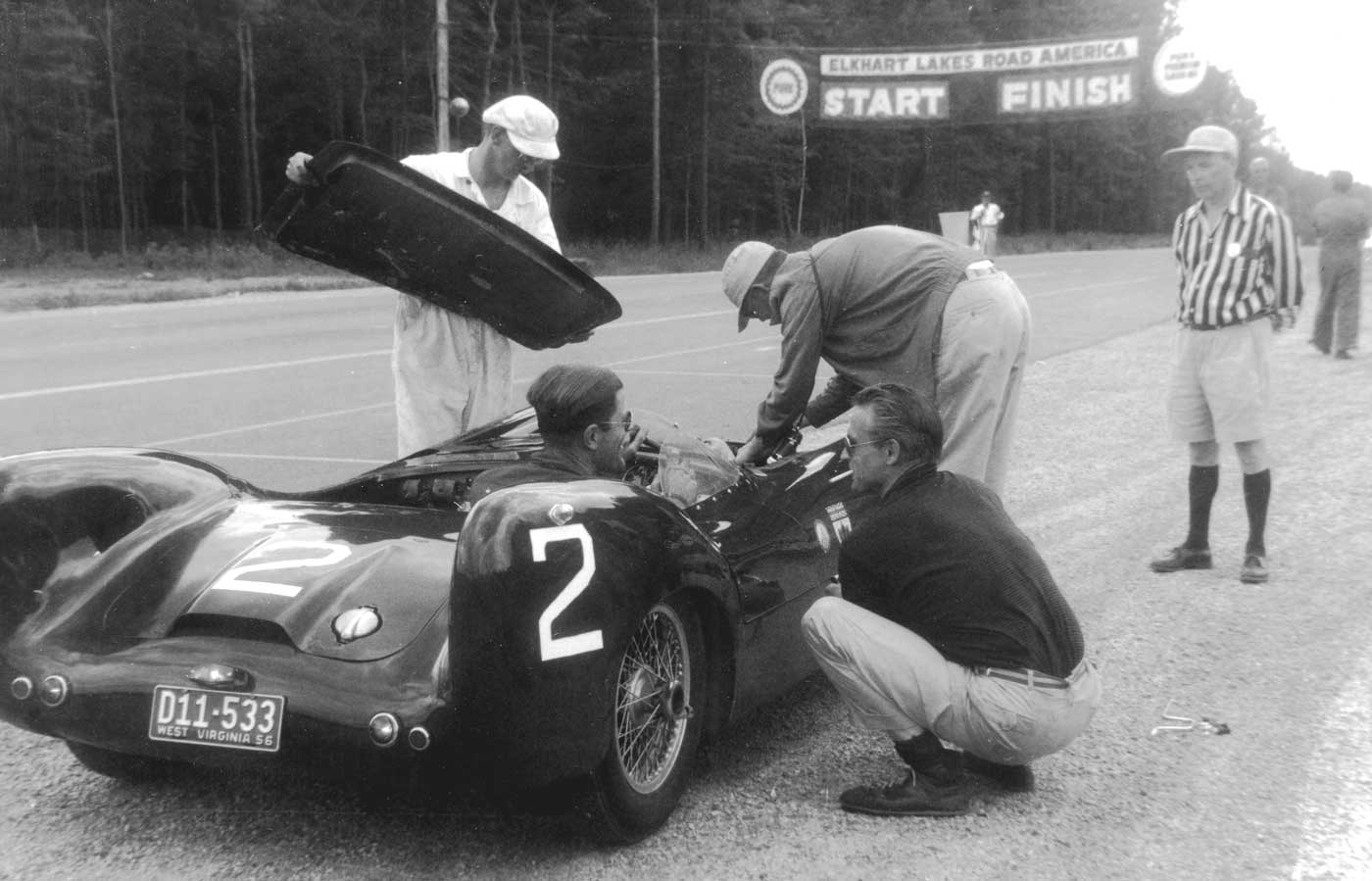
Major R.J. Wyllie in the Lotus during practice.
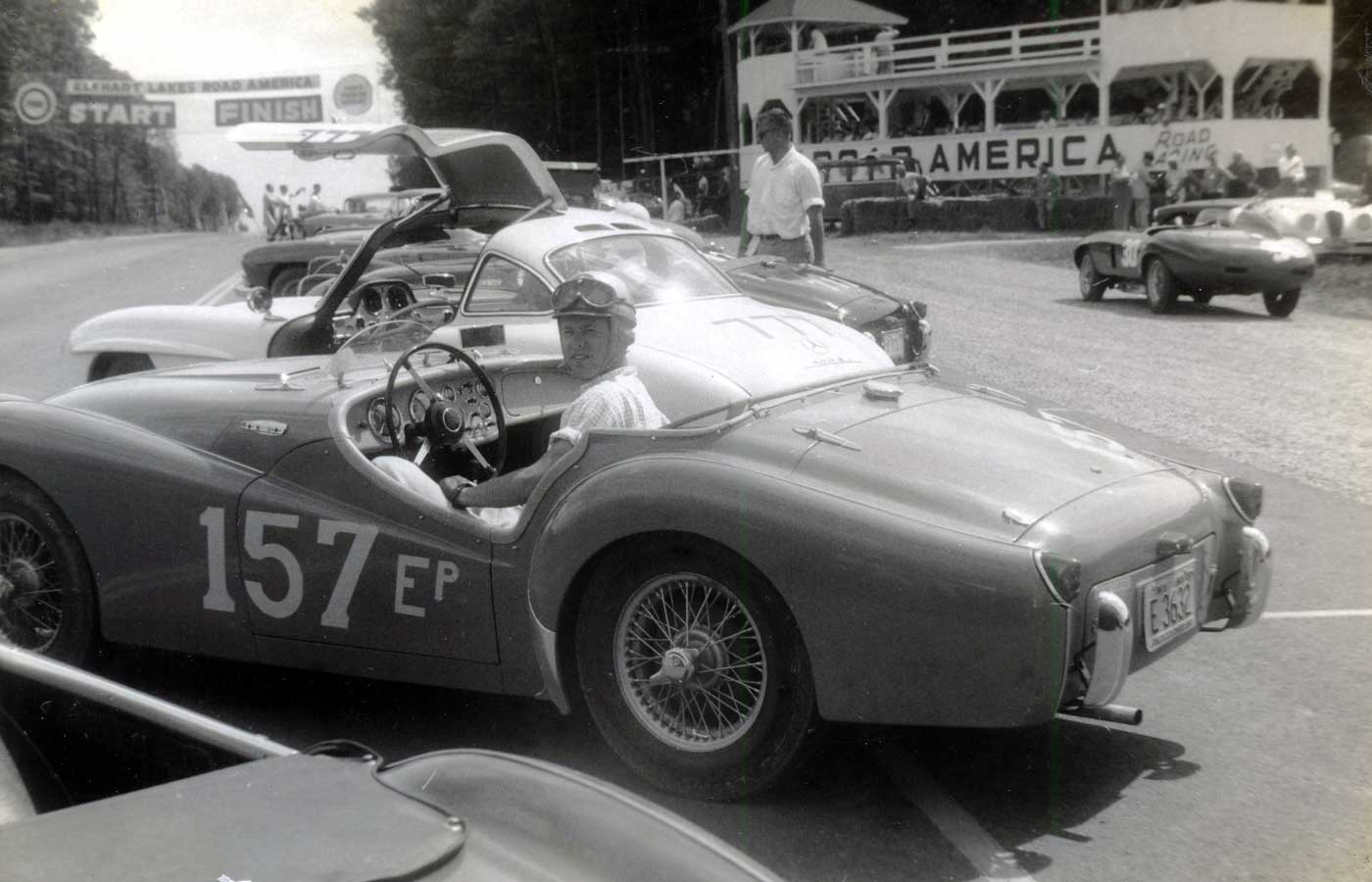
Bill Kimberly, Jim’s nephew, in a TR3 would place last in race 2.
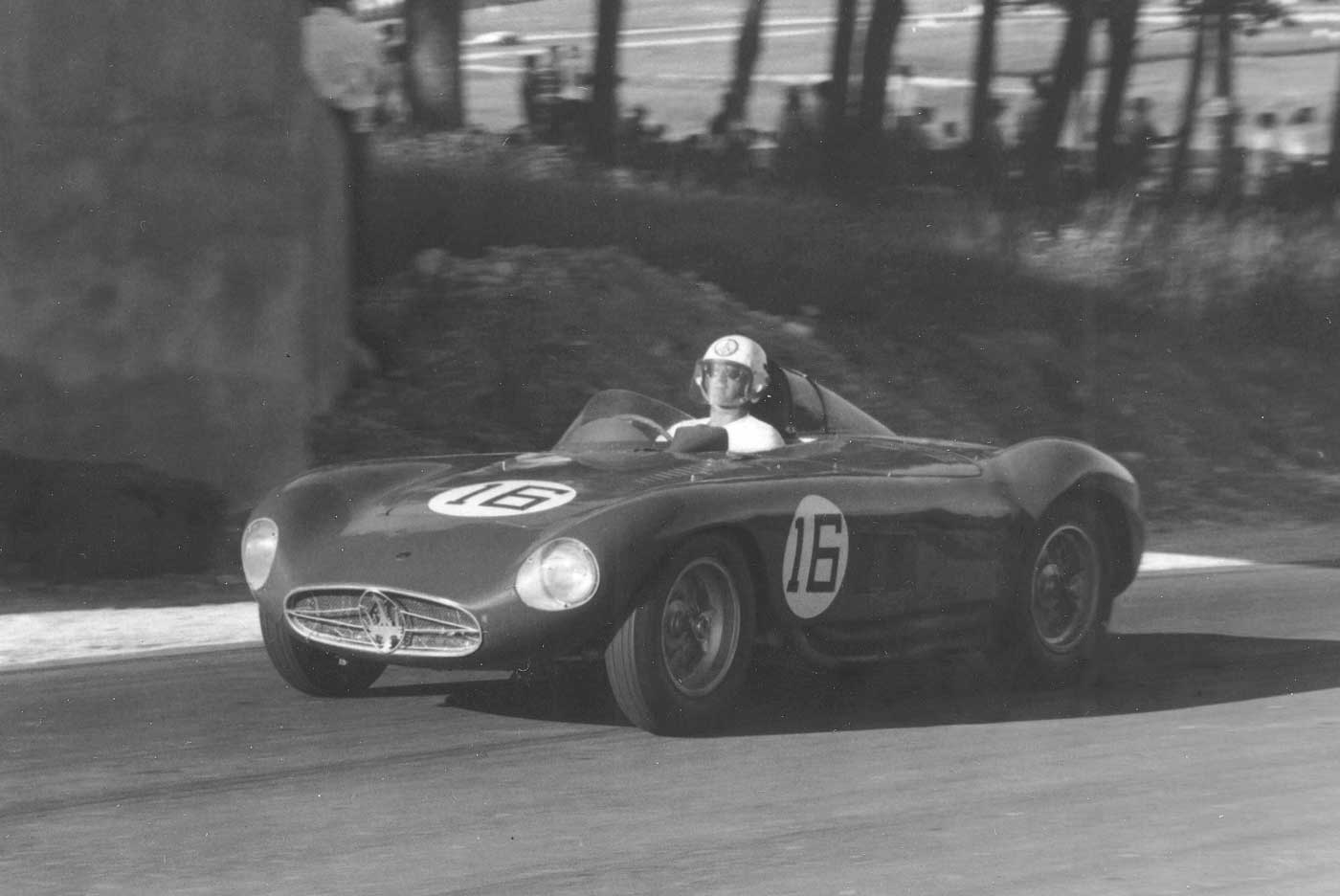
Bill Lloyd, Maserati, placed 7th in race 7.
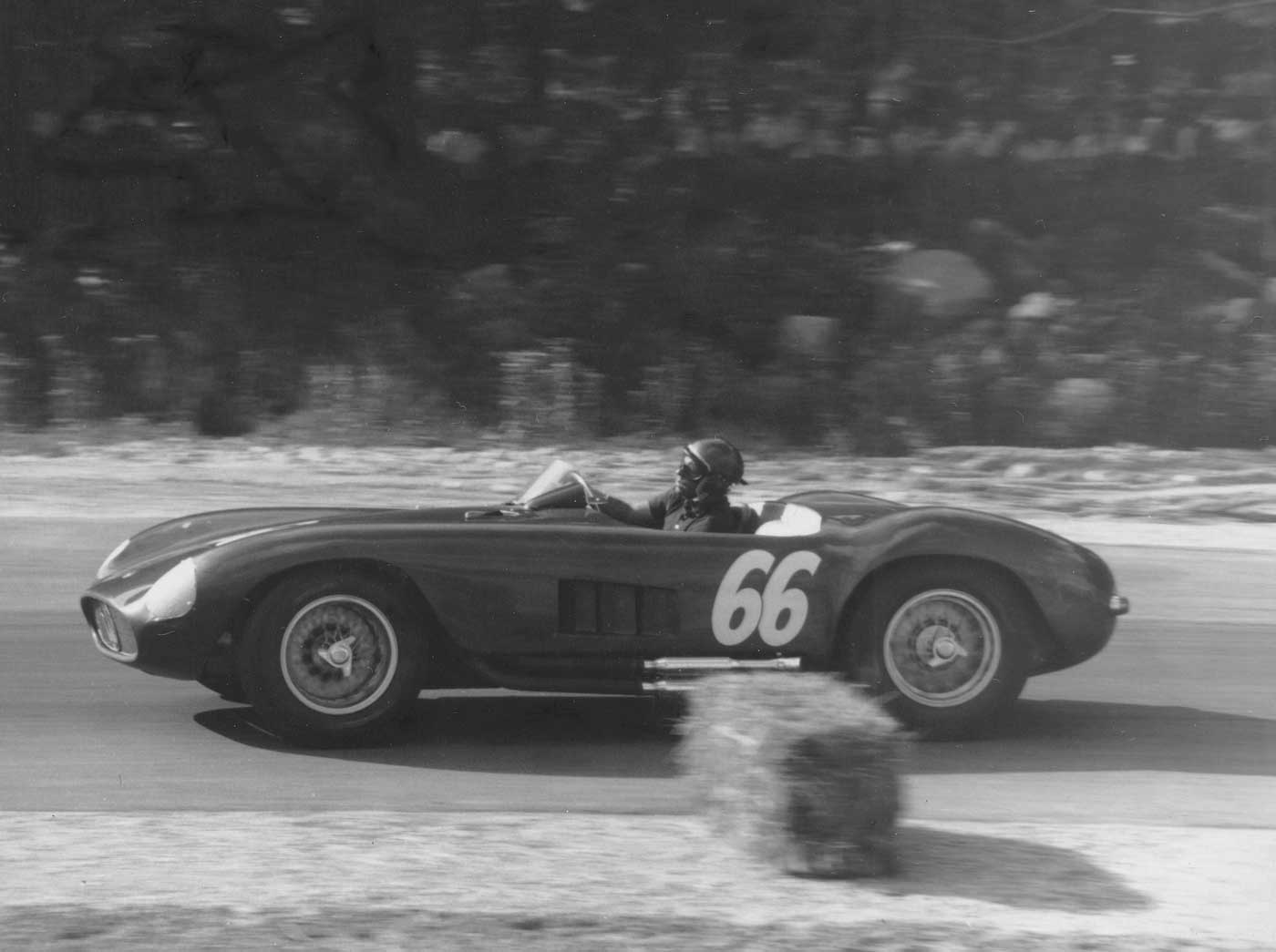
Phil Stewart, Maserati, came in 6th ahead of Bill Lloyd in race 7.
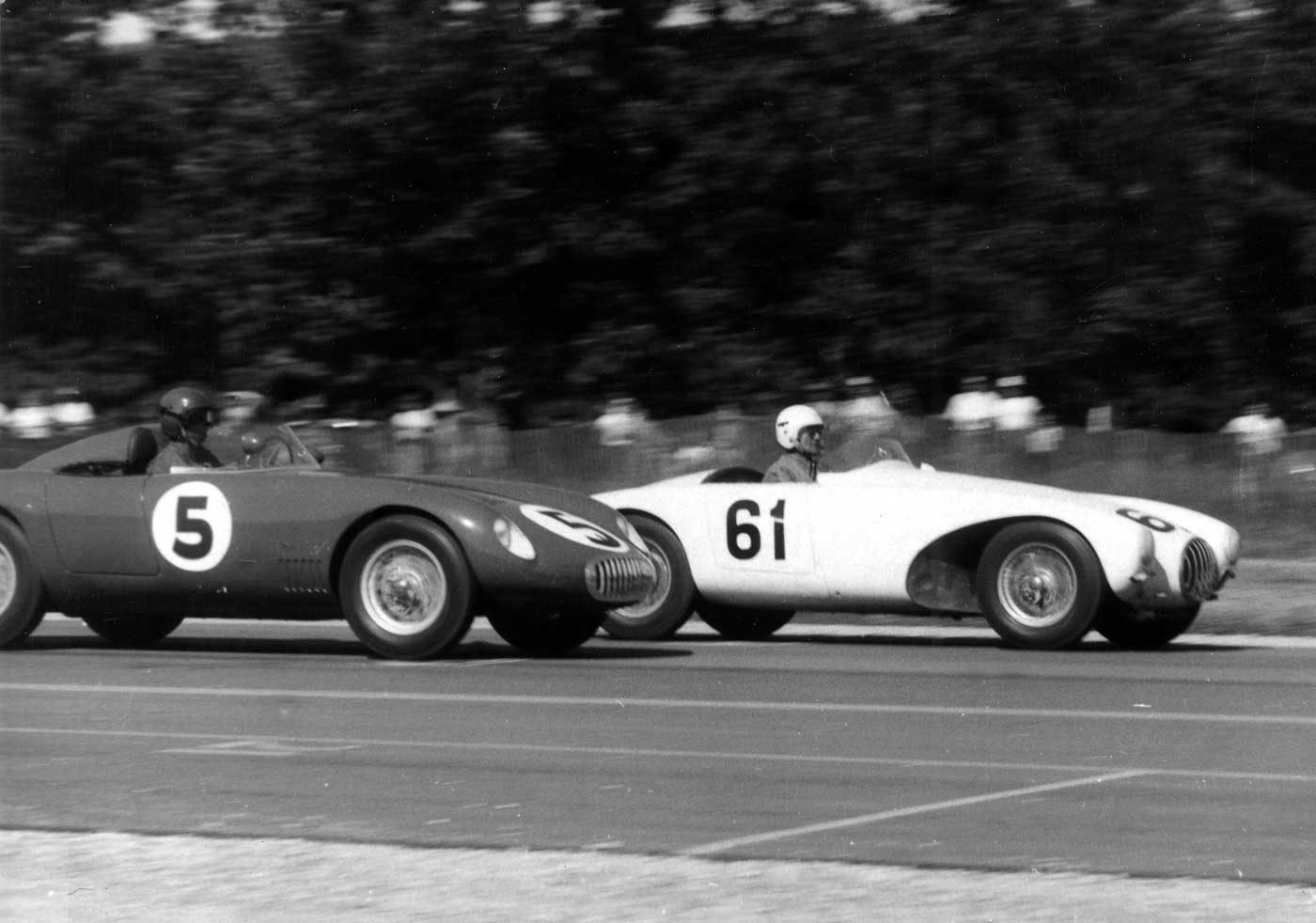
Jim Kimberly in OSCA number 5 getting even with Briggs Cunningham in OSCA #61.
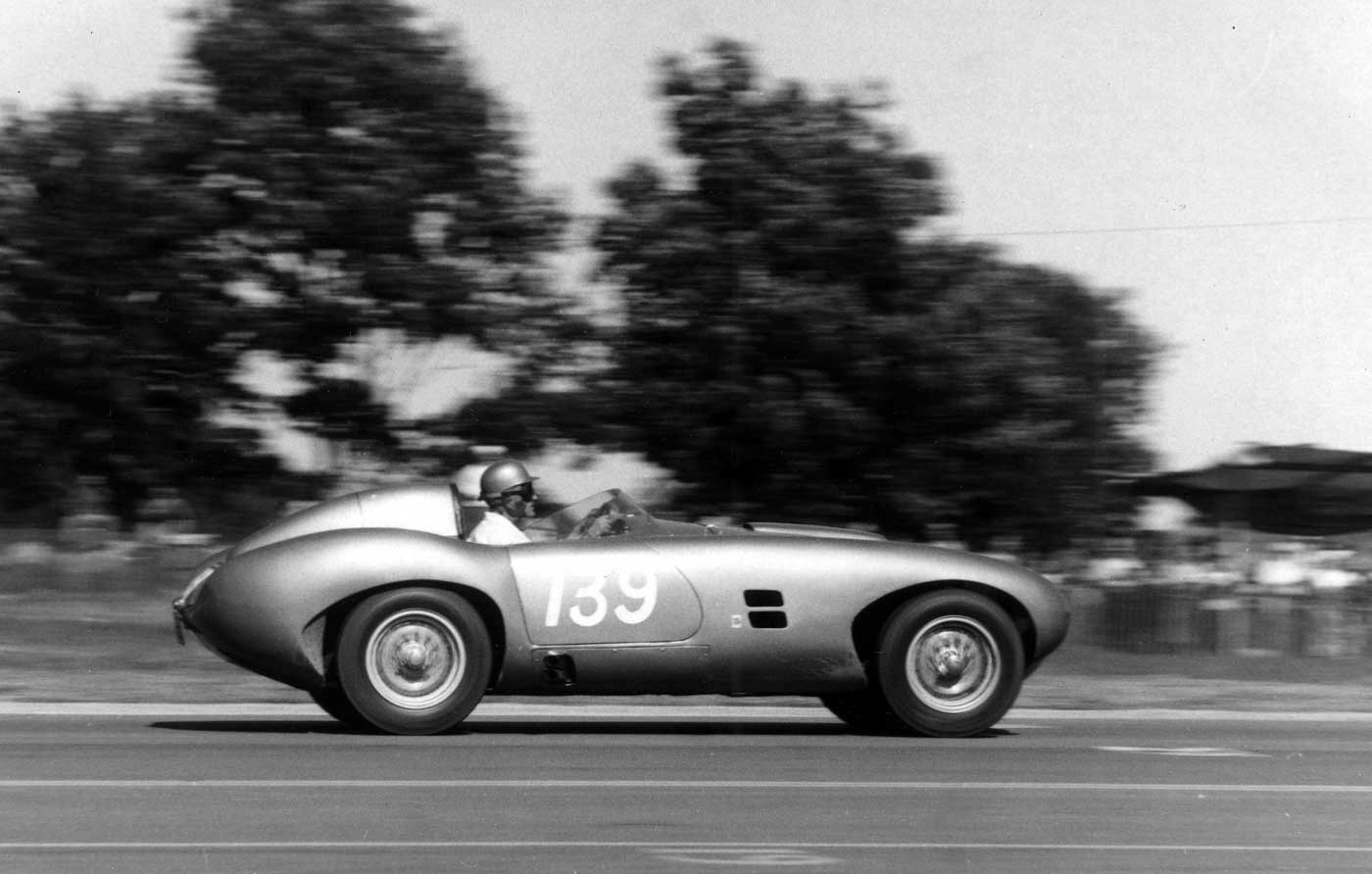
James Rowland Lee in the Frazer-Nash.
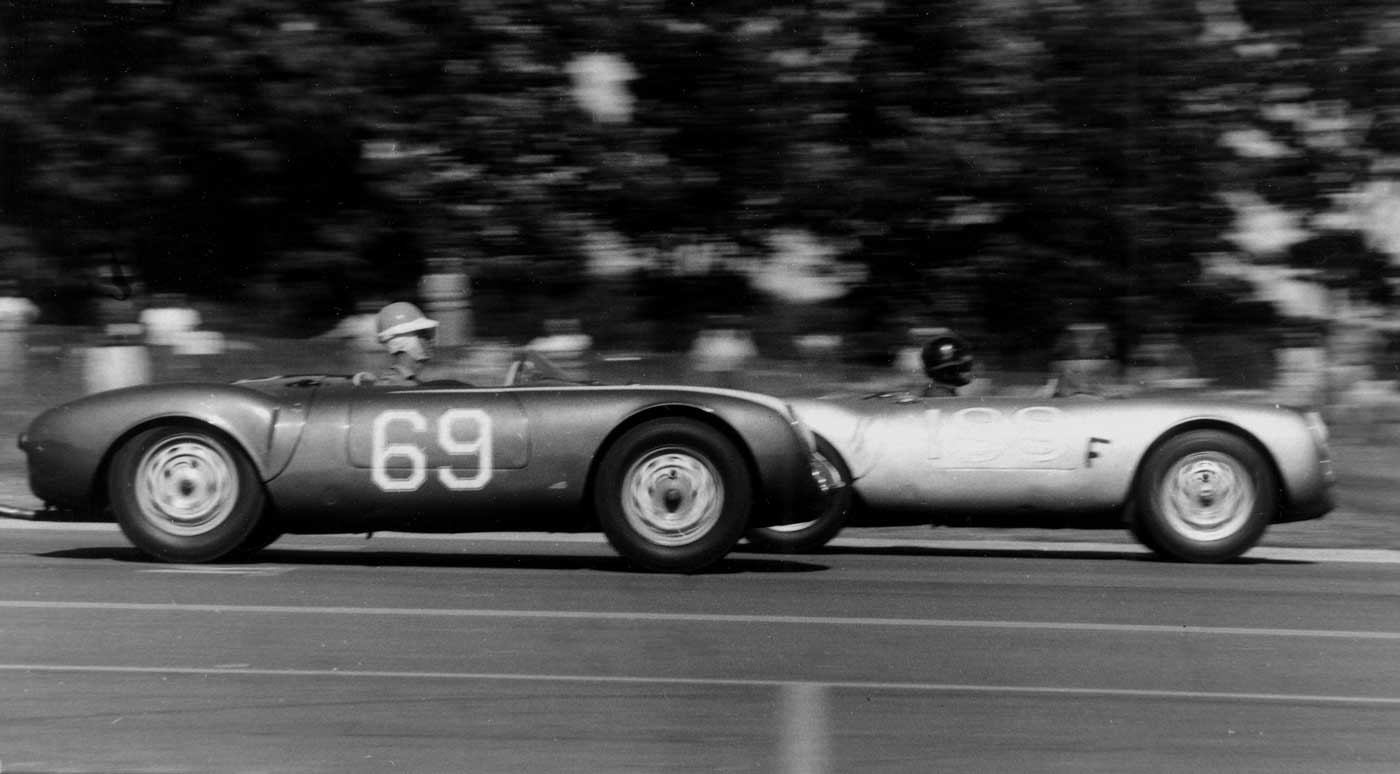
Ed Crawford, #69, battles it out with Jack McAfee in dueling Porsches. McAfee would win race 3.
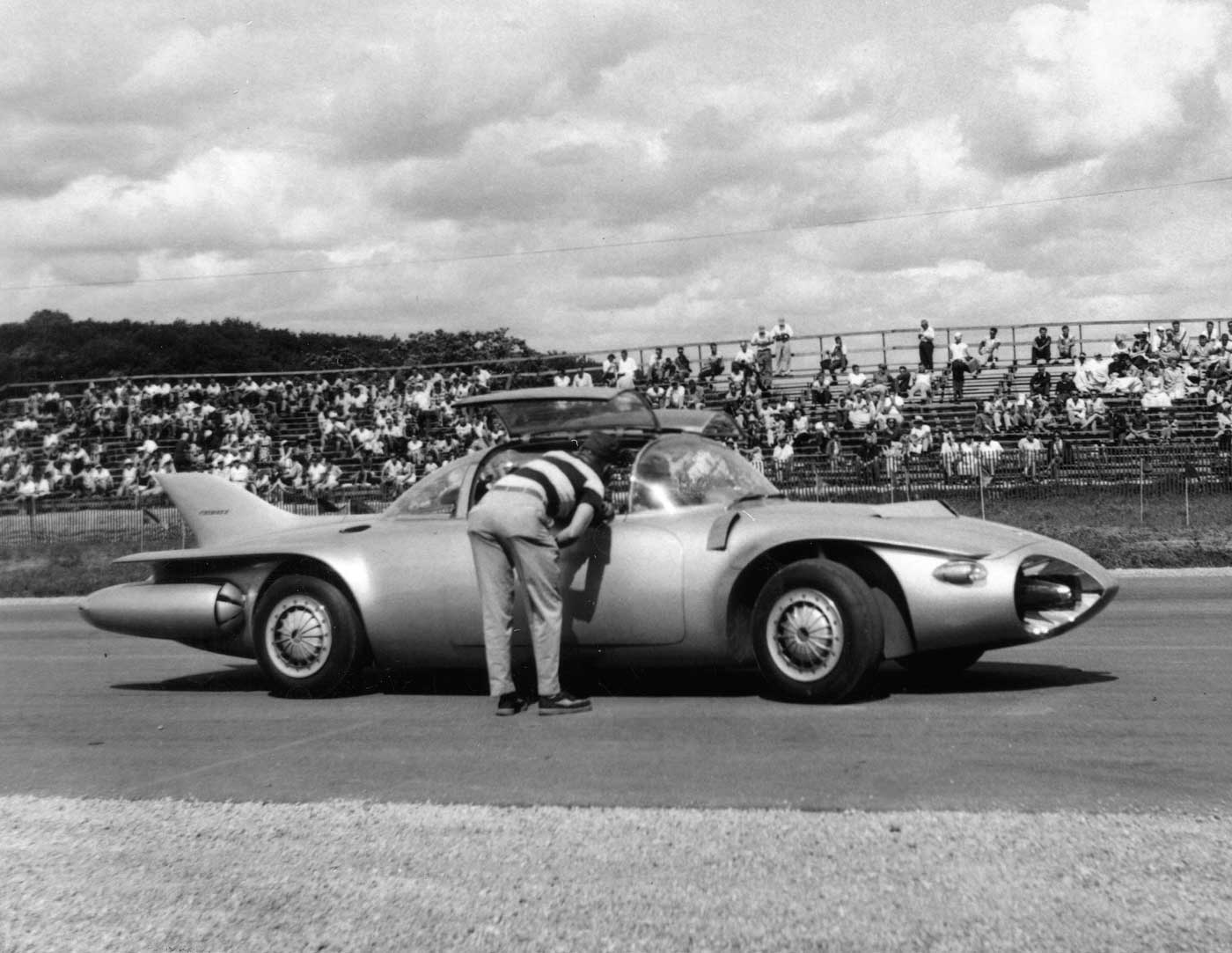
GM’s Firebird was on hand as well.
Note: No Ferraris!? We have saved photos of both the Ferraris and Corvettes at Road America for another article in VeloceToday. Also, for those who are interested in the race statistics, a great source is racingsportscars.com
Great to see a photo of a young Bill Kimberly. He told me once that 1956 was his first full race season with the TR3. Bill was still in the Navy in Pensacola, but a friend loaned him a trailer, so that he could make it up to Road America. Bill remembered he and another friend, Peter Bunn, finished 22nd overall and 5th in class. “Not bad considering the car was old and not maintained as a race car.”
Looking at the helmet, driving the #58 D Jag is John Fitch. Fitch always had the wide white stripe with the dark top. Johnston usually just a white helmet. That particular photo might have been taken at the August 6 hour where Fitch and Briggs drove #58 OR Fitch was driving #58 it in practice after he rolled his #61. There is no doubt it is Hansgen in #59.
Dave
Sharp eyes there! Yes, it looks like Fitch’s helmet. Got Sherwood’s name from the entry list on the program, a DNF for number 58. But as we all know, the program could be wrong, or Glendenning’s hand written notes could have been wrong as well.
Pete
Was M.R.J. Wyllie ever actually a Major? During the second world war he served in the Royal Navy and climbed to be a “Lieutenant Commander”. For years I wondered what the initials stood for, and he was always called Doc Wyllie, probably because of his job as an oil executive at Gulf Research. In 1990 I showed a 1962 Le Mans photo, with Walt Hansgen and Wyllie, to Dick Thompson and he replied: “That’s Jesse! And that’s my first wife behind him in the pits.” I guess that for his friends he was always just Jesse. The initials shood for Malcolm Robert Jesse.
Frazer Nash #139 – that’s James Lowe (not Lee) of Santa Cruz, California. Lowe became SCCA San Francisco Regional Executive in 1955 and National Secretary in 1956
Thanks for reading! You may be correct, but the final results from RA show that a James Rowland Lee was driving number 139 and DNF. Marion Lowe was driving Fraser Nash number 138 and finished last in the third race for E and F modifieds. And as we know, the programs are not always correct.
Pete
I tend to agree it was James Rowland Lowe in the #139 Fraser Nash. He often ran the car, a Le Mans Replica Mk 2, under #39.
The fact that his wife ran at RA under #138 further indicates a husband-wife team approach.
I am pretty sure that the photo with John Fitch in the#58 D-type was taken during practice, trying out a car not assigned to him. The booklet The First 10 Years of Road America features a start photo of Race 7, with on the front row of the grid Sherwood Johnson in the finless #58, next to Fitch in the D-type #60 with fin. So, the program turned out to be correct.
From my book ‘The Postwar Frazer Nash’ published by Palawan in 2009. (Note Frazer with a Z not an S) :
Ordered by James Lowe of Santa Cruz, California. Jim Lowe became San Francisco Regional Executive of the SCCA in 1955 and National Secretary in 1956. Raced by Lowe in California Sports Car Club and SCCA races from 1953 to 1956, and sometimes by his wife Marion who usually raced her own Frazer Nash. Both cars were prepared by Bill Breeze who owned the Sports Car Center in Sausalito, California. Lowe was SCCA National Class E Modified Champion in 1955.
New full-width body by Nadeau Bourgeault, also of Sausalito, fitted winter 1955/56. Raced By Jim Lowe throughout 1956
Sold to Jim Firestone, February 1957. Firestone crashed the car and was killed at Paramount Ranch, 8th December 1957. Car apparently flipped several times, was severely damaged and was scrapped.