By Willem Oosthoek
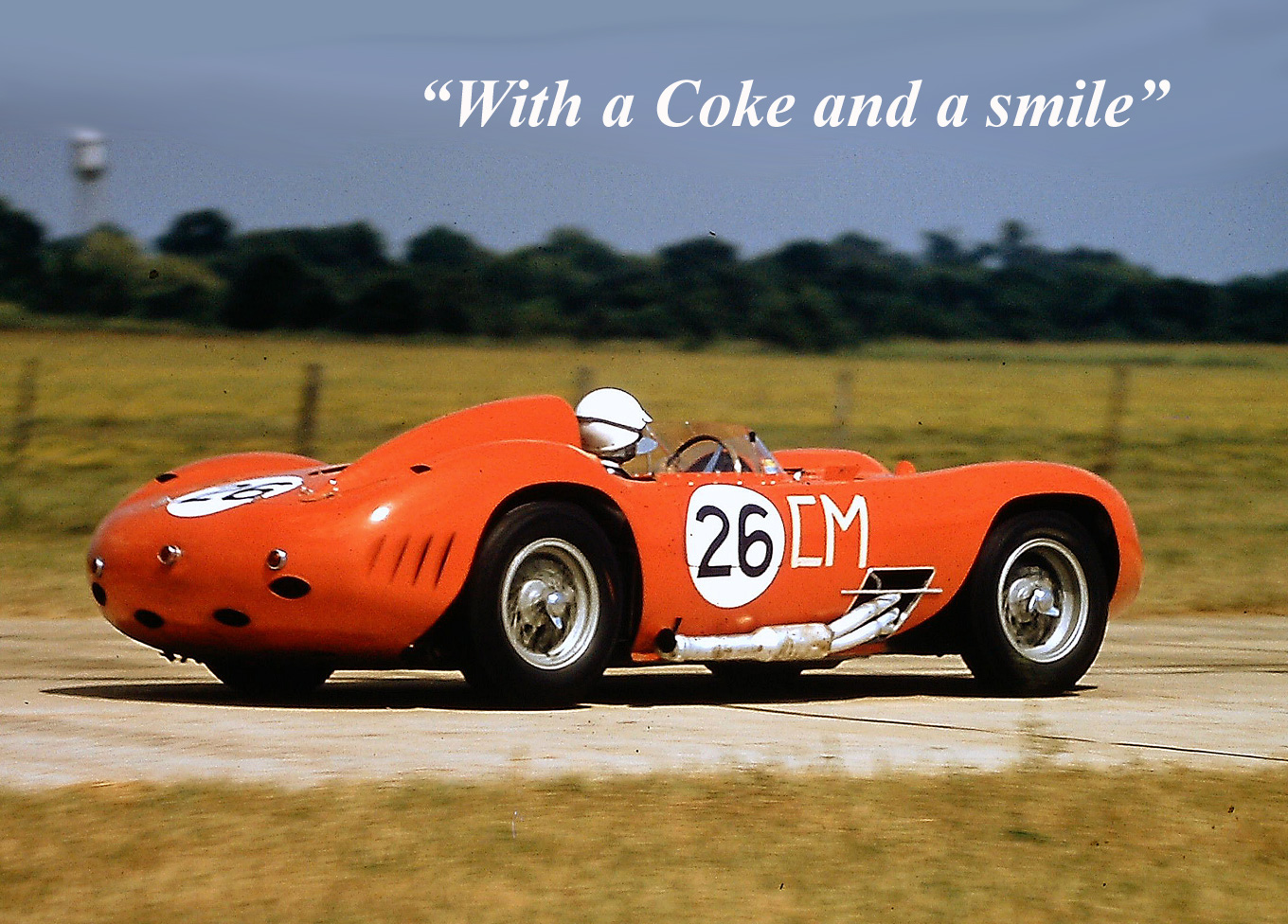
The above title quote is how a Maserati-loving bottling magnate always ended his correspondence.* The bottling magnate was J. Frank Harrison Jr., whose father was a nephew of John T. Lupton, one of the Coca-Cola pioneers.
The Online Magazine for Italian and French Classic Car Enthusiasts
By Willem Oosthoek
The above title quote is how a Maserati-loving bottling magnate always ended his correspondence.* The bottling magnate was J. Frank Harrison Jr., whose father was a nephew of John T. Lupton, one of the Coca-Cola pioneers.
By Willem Oosthoek
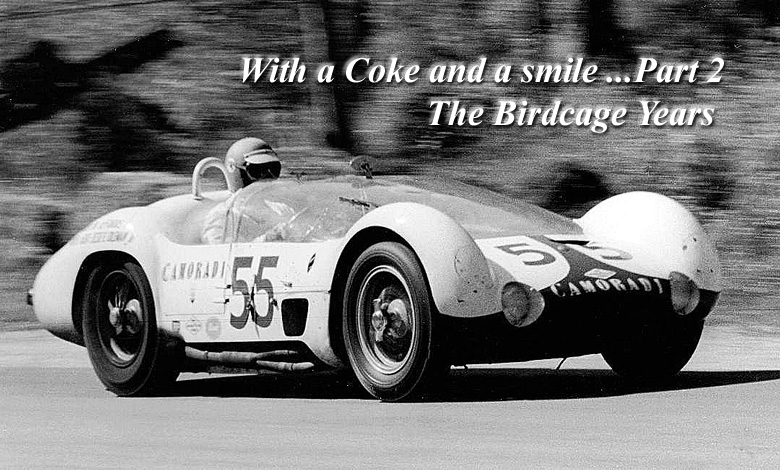
After the Dothan, Alabama, event in October 1959 both Frank Harrison and his driver, Jim Hall, realized that the era of the Maserati 450S as a top feature contender had come to an end.
By Willem Oosthoek
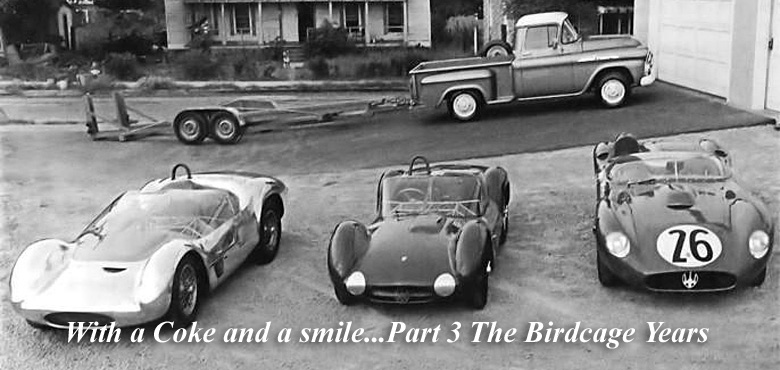
The Harrison team brought all three Maseratis to the next event, the Road America 500 miler in September. Each car was practiced and the 450S was fast but considered too much of a handful in a long-distance race. With the new red Birdcage offering even better handling than the Streamliner, it became Jeffords’ preferred car.
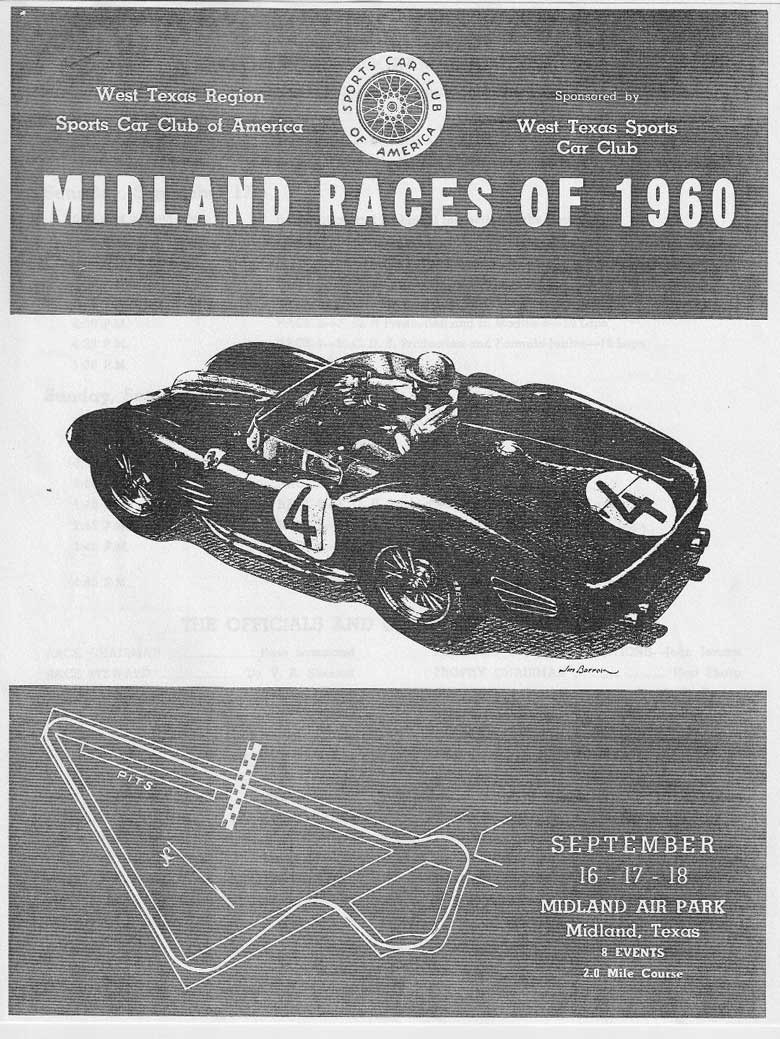
The cover of the September 1960 Midland race program. Although Hap Sharp owned a 1959/60 Ferrari 250TR at one point, it never saw action at Midland Airpark.
Story by Willem Oosthoek, photos by Bob Jackson
The 3rd Annual Midland Sports Car Races took place on September 17-18, 1960, again at Airpark. Based on published spectator numbers – 4,000 on Saturday, 6,000 on Sunday – the event was a commercial success, but based on the number of entries, not so much.
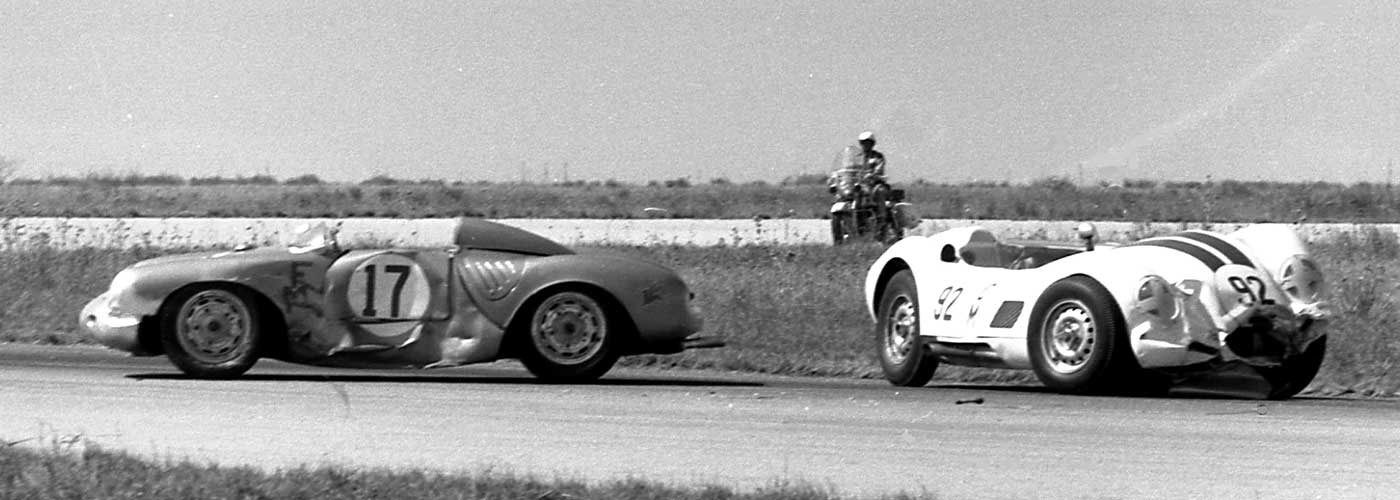
In the first turn of Race 4’s opening lap, Ronnie Hissom’s Lister/Chevy and Emory Cantey’s Porsche 550RS came together, knocking both cars out for the weekend.
Story by Willem Oosthoek, photos by Bob Jackson
Last week we described the strong October 1959 entry list, at least for an SCCA Regional in the Southwest. Today we’ll have a look how the big modifieds – five Ferraris [two with Chevy engines], one Maserati/Ferrari, three Chevy-engined Listers and a Jaguar/Chevy – performed in the two races scheduled for their class during the 2nd Annual Midland Sports Car Races. Their individual chassis numbers were mentioned previously, so we won’t repeat them.
Local resident and oilman Hap Sharp was instrumental getting the Midland Airpark Races established. Seen here during the October 1959 edition, he is at the wheel of chassis 2432, his hybrid entry: a Maserati 250S with a 3-liter Ferrari Monza engine. It was hot and humid, so in practice Hap tried the use of a rubber air hose to stay cool. It probably did not work too well. It was discarded during the actual races.
Story by Willem Oosthoek
Photos by Bob Jackson
When the name Midland is mentioned, people automatically think of Rattlesnake Raceway, or the more recent Petroleum Museum, which displays the various models of Jim Hall’s Chaparral 2 sports racer. But Jim Hall didn’t even participate when sports car racing began in the early days at Midland, and those activities weren’t held at Rattlesnake Raceway, which did not exist yet.
In addition to our comments section below each article, VeloceToday often gets very nice compliments, sent via email or included in a note with a subscription check. These comments rarely get published, but are meant as recognition of the work done by our contributors, who create the content that makes VeloceToday what it is. Magazines are nothing without good content, and therefore contributors are our greatest and most valuable assets.
They are historians, authors, editors, photographers, columnists, journalists, judges, drivers, restorers, artisans, collectors and constructors. They hail from the United States, Great Britain, Australia, Germany, France, Belgium and Italy. Here are the names of thirty-three whose contributions made the year 2024 one to remember.
Jeff Allison, Gary Axon, Giles Chapman, Bob Cullinan, Rodney Diggens, Joseph Duray, Brandes Elitch, Graham Gauld, Greg Glassner, Bob Harrington, Joe Hurwich, Stefan Ivanov, Vince Johnson, Jackie Jouret, Allen R. Kuhn, Dale LaFollette, James Lanoway, Frederic Levaux, Bernard Linck, Roberto Motta, Herb Miska, Chris Nugent, Willem Oosthoek, Paul Sable, Charley Seavey, Jonathan Sharp, Jim Sitz, Roy Smith, Sean Smith, Pete Vack, Hugues Vanhoolandt, Paul Wilson, Robert Young
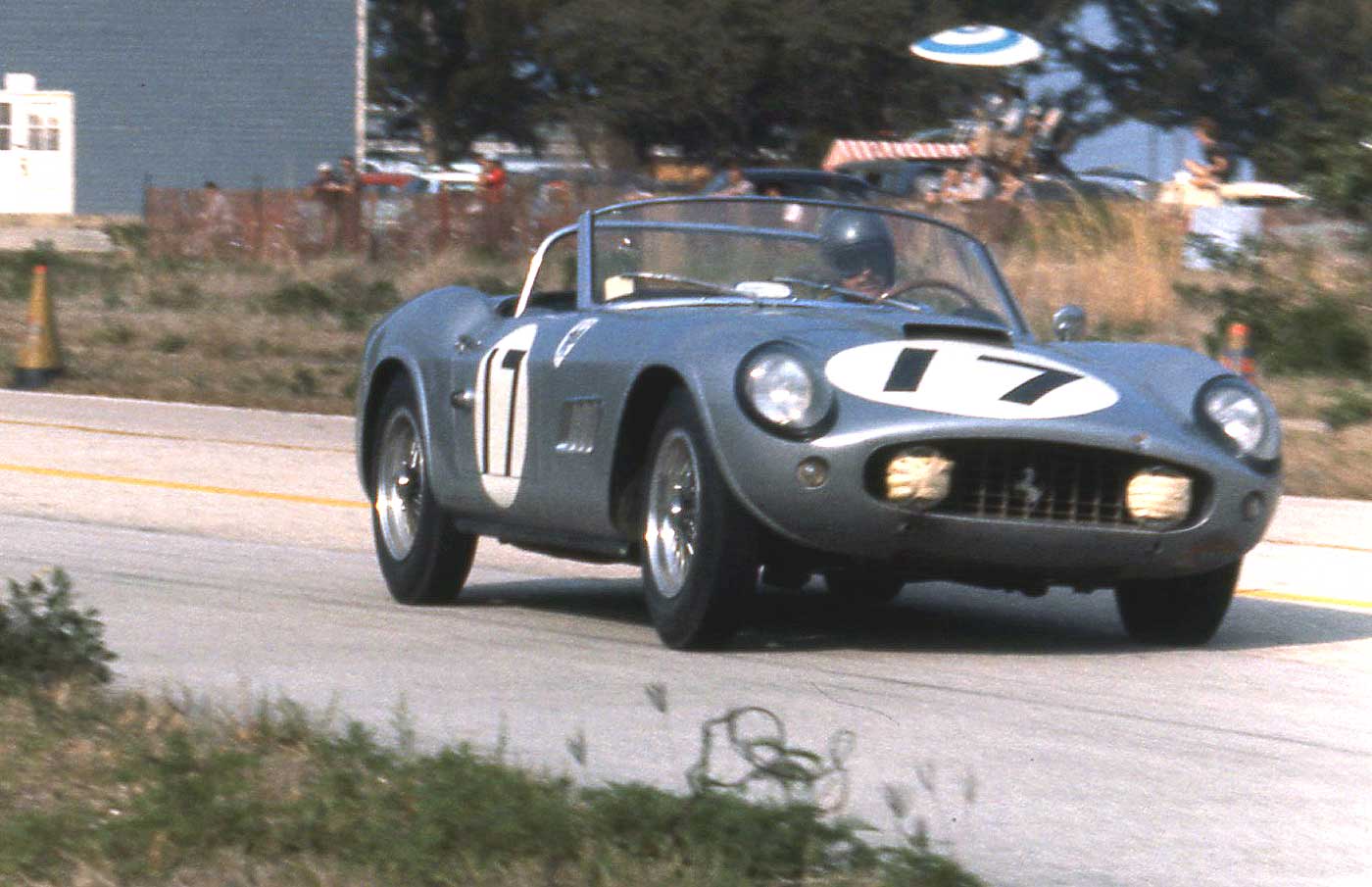
Alan Connell in the Ferrari California [chassis 1603] he shared with owner George Reed. Connell flogged the car and ran as high as 3rd overall after ten hours, before the drivers had to settle for a 5th place at the finish.
By Willem Oosthoek
All photos taken by Bob Jackson [Willem Oosthoek Collection]
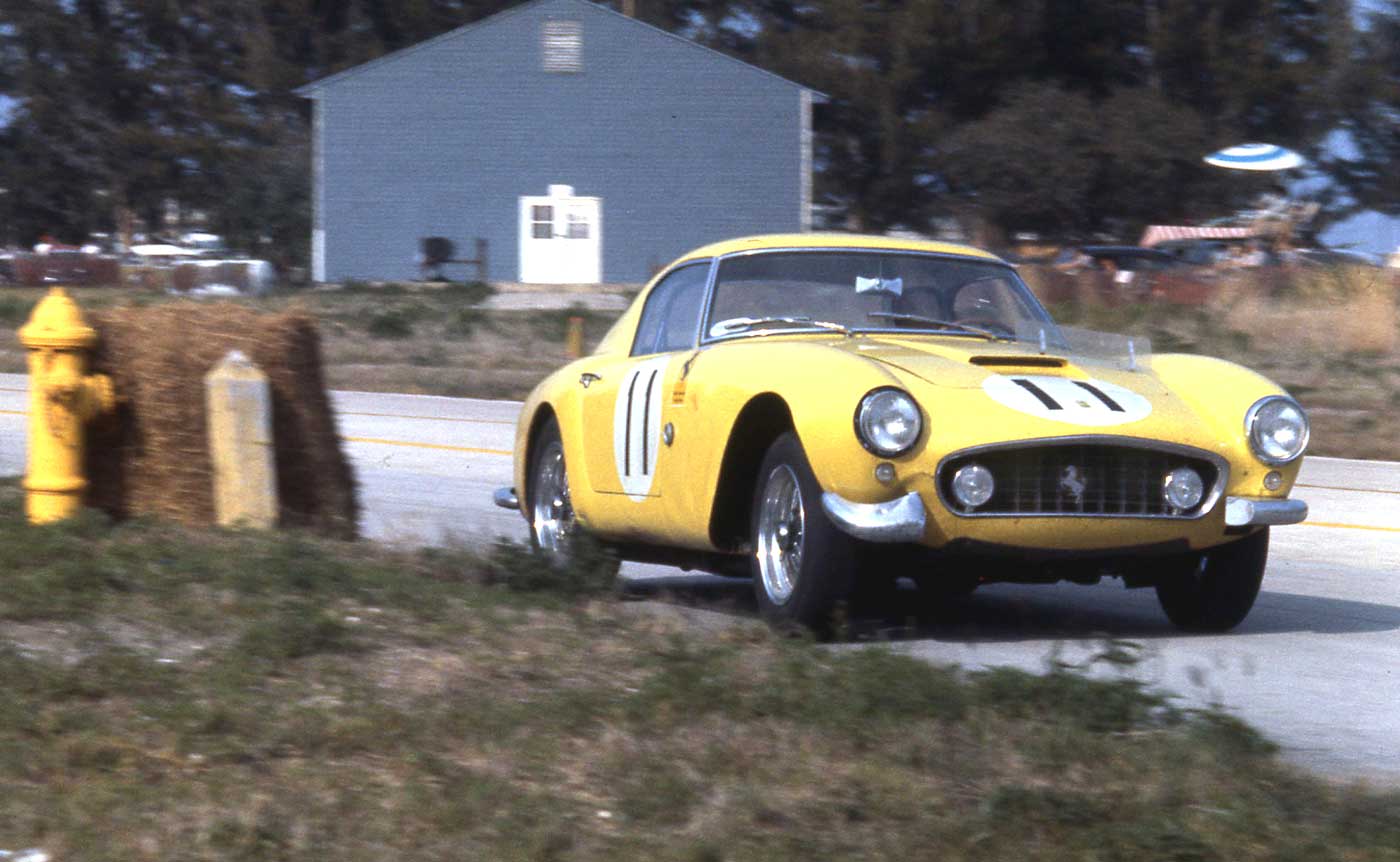
This gorgeous 250GT [chassis 1773] was entered by Luigi Chinetti’s NART for George Arents [here] and Bill Kimberly. They ended 7th overall, one of the six GT Ferraris finishing in the top ten. It showed the reliability of these cars.
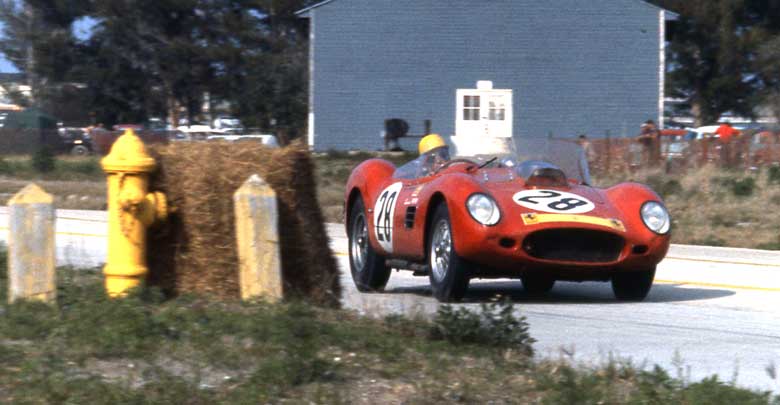
Ricardo Rodriguez in the NART-entered Ferrari Dino 196S [chassis 0776] that he co-drove with brother Pedro. The car ran well for the first five hours, occupying 5th overall. Then it began dropping back, to retire with clutch failure after 126 laps.
By Willem Oosthoek
All photos by Bob Jackson [Willem Oosthoek Collection], unless stated otherwise.
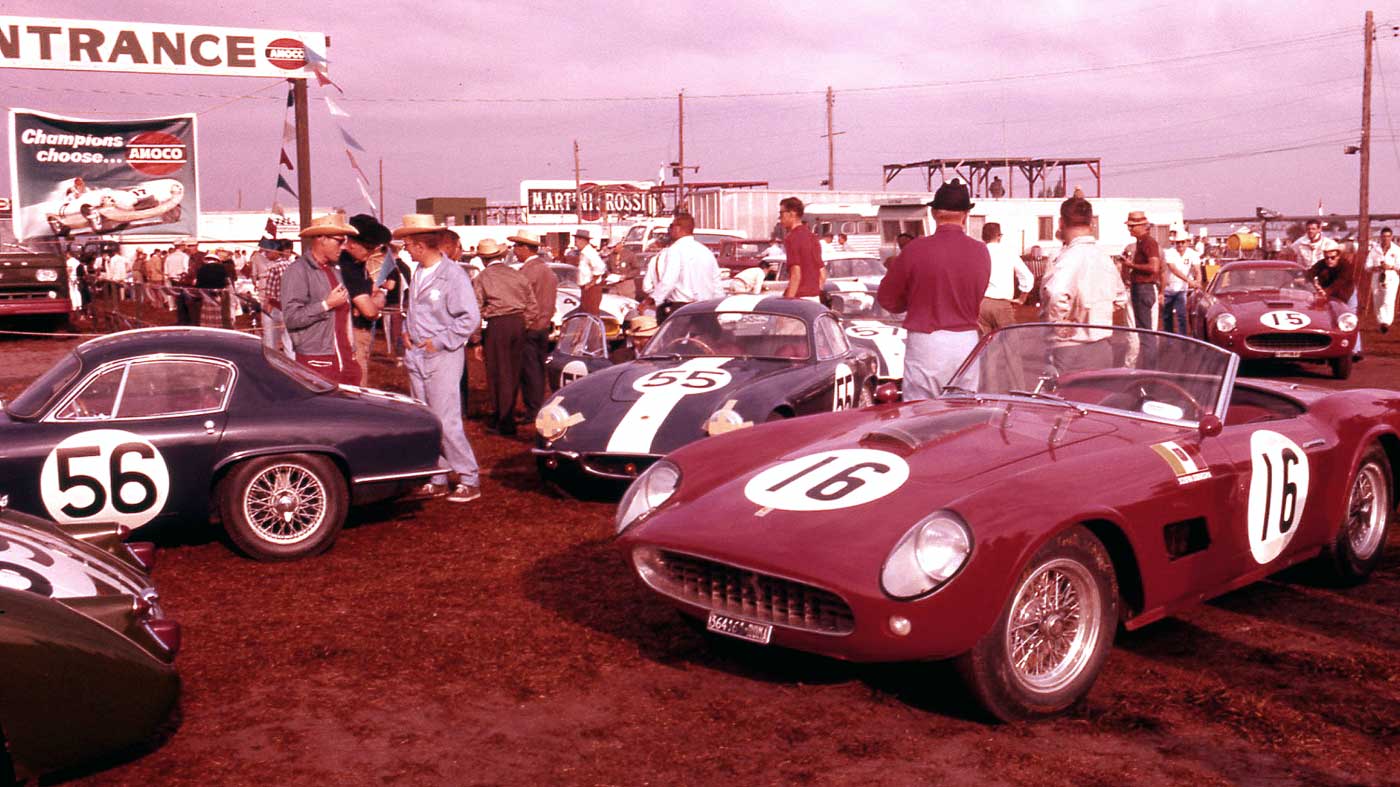
Sebring earlier in the week. Scrutineering has started, with the Count Giovanni Volpi Ferraris lined up. Both his Scuderia Serenissima entries were allowed to run in the GT class, the #16 California [assigned to Giorgio Scarlatti/Fabrizio Serena] due to its steel body, while #15 [for Carlo Abate/Giovanni Balzarini] because it was an older 250GT Tour de France model, already homologated in the U.S. The Lotus Elites were entered by Jay Chamberlain, the Lotus importer based in North Hollywood.
By Willem Oosthoek
All photos taken by Bob Jackson [Willem Oosthoek Collection]
After the two support races on Friday, it was time for the 12 Hours itself. Unlike the wet 1959 event, Saturday’s weather promised to be warm and clear. But two things had changed for this year’s endurance race. The FIA had mandated new rules for the sportsracers, forcing them to meet the same requirements as the GT entries. This meant they had to feature a 25 cm high windshield, 30 cm high doors, a separate compartment for a suitcase measuring 20 x 40 x 65 cm, a ground clearance of 12 cm and a “useful” top. Many of the especially smaller and lower entries needed last-minute body modifications to comply with the new rules.
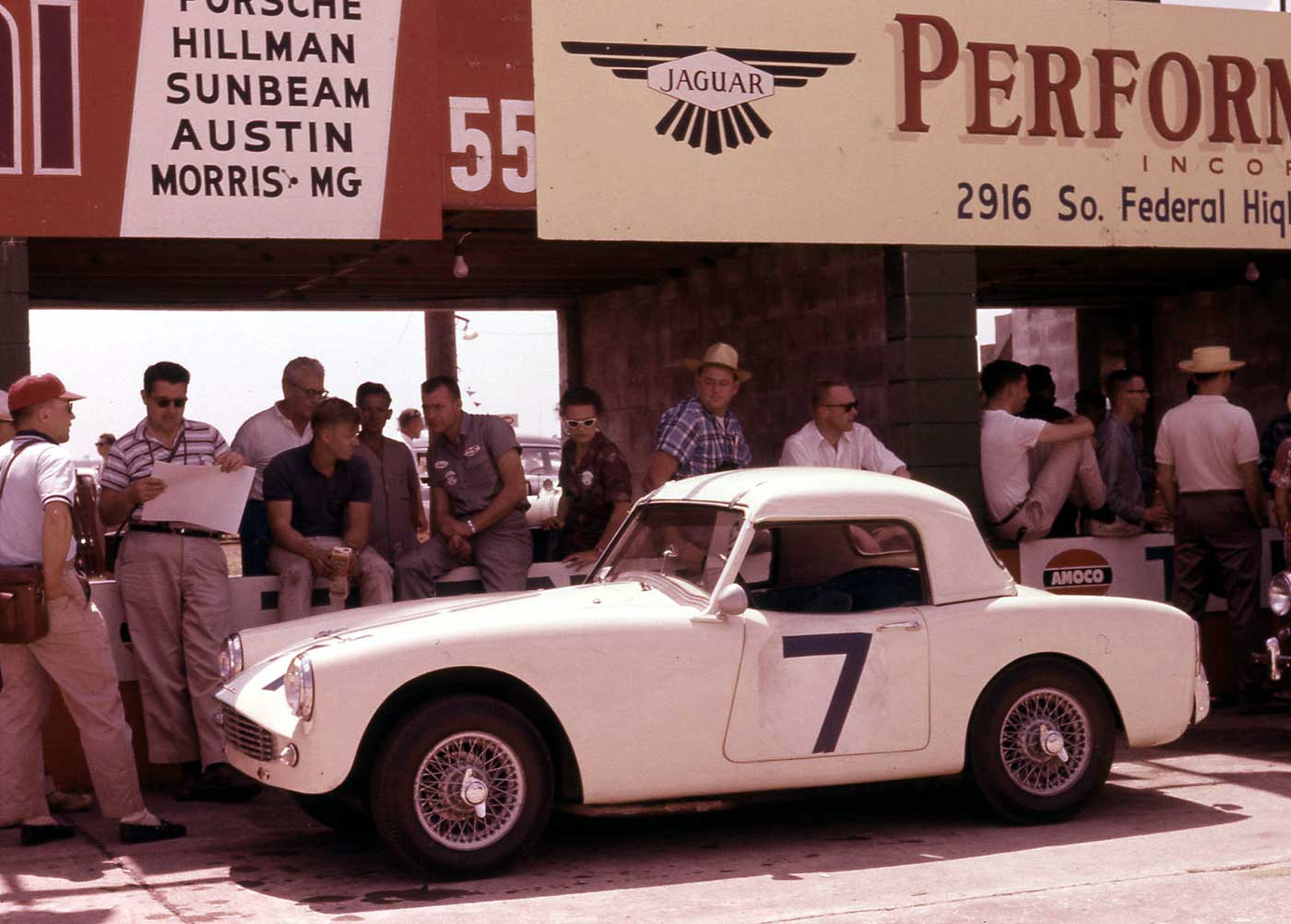
Race number 7 was part of three Turner works entries. This 750 cc car was driven by Fred Woodhead and Harold Krech.
By Willem Oosthoek
All photos taken by Bob Jackson [Willem Oosthoek Collection]
After the Formula Junior support race on Friday morning, March 25, 1960, everybody convened for lunch. On the program for the rest of the day was a 4-hour race for the International Trophy, limited to GT cars under-1-liter. In addition to the four Turners, the entry list showed eight Fiat-Abarths [750 cc], six DB-Panhards [almost 1 liter], six Austin-Healey Sprites [almost 1 liter], and a few oddities, such as a just under 1 liter Ford Anglia for Richard Toland and a 750 cc Saab for Jack Sheppard. Four of the Fiat-Abarths were entered by Franklin D. Roosevelt Jr, son of the former President. [Read more…] about Sebring 1960: Under 1 liter GT Race
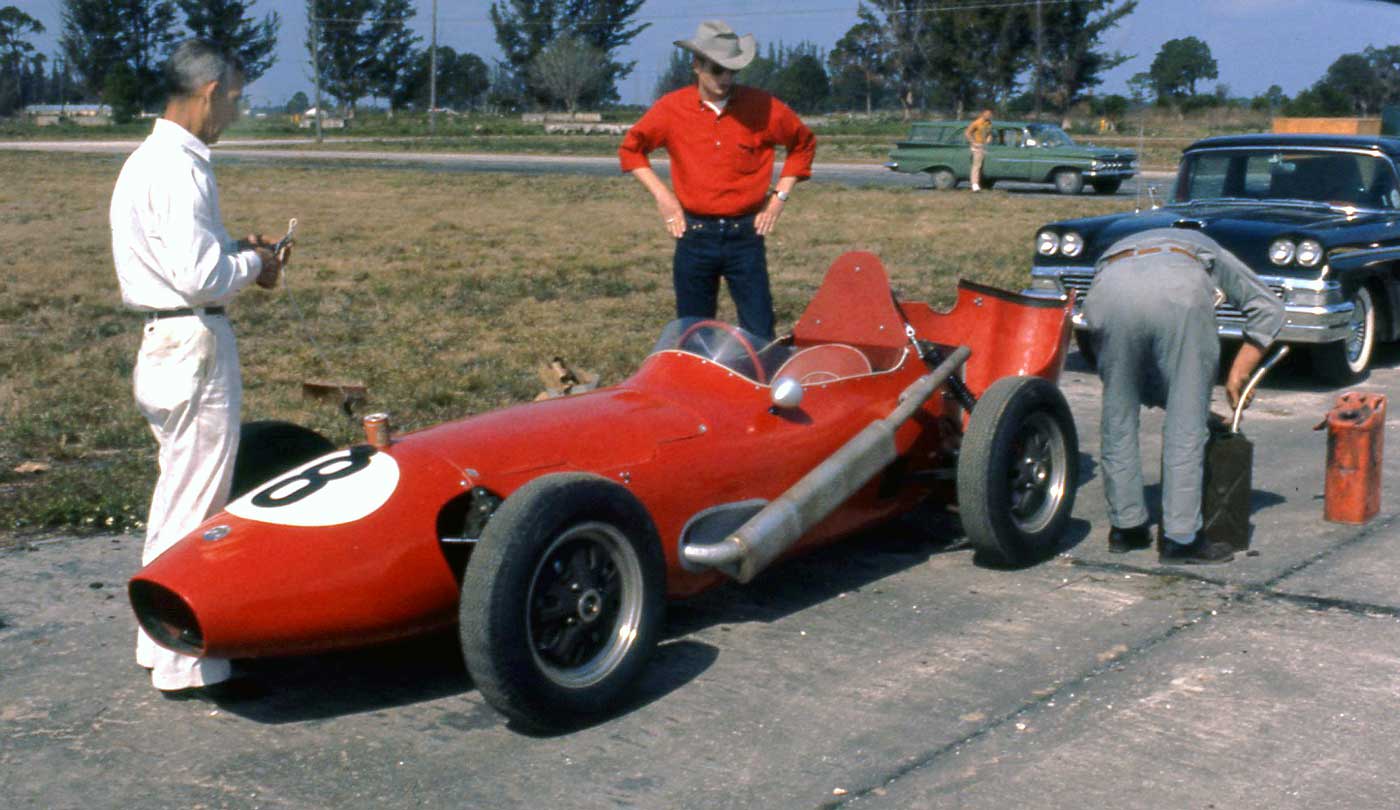
Sebring, leading up to Friday. March 25th. Jim Hall poses next to his DKW-powered Elva FJ. His body man Foy Barrett is on the left, and the fuel man is Chester “Chet” Hines. Chet was Hap Sharp’s aircraft mechanic, often drafted to serve as part-time race mechanic.
By Willem Oosthoek All photos taken by Bob Jackson [Willem Oosthoek Collection]
The 1960 edition of the Sebring 12 Hours was scheduled to start at 10 AM Saturday, March 26. But competition actually began a day earlier. For the first time in its history, the 12-hour event featured two opening races, one for Formula Juniors on Friday morning and a 4-hour event for Under-1-liter GT entries in the afternoon. [Read more…] about Formula Junior at Sebring, 1960